

The Zero-Prompt Era and the Future of AI
ArticleArtificial Intelligence
AI is moving past chat prompts toward contextual tools. Google's Dreambeans expansion points to a future where software anticipates needs.
- AI
- Dreambeans
- Future of Tech
- Productivity
Dvilite Team| Last updated on 4 November 2026 · 5 min read
Understanding the Zero-Prompt Shift
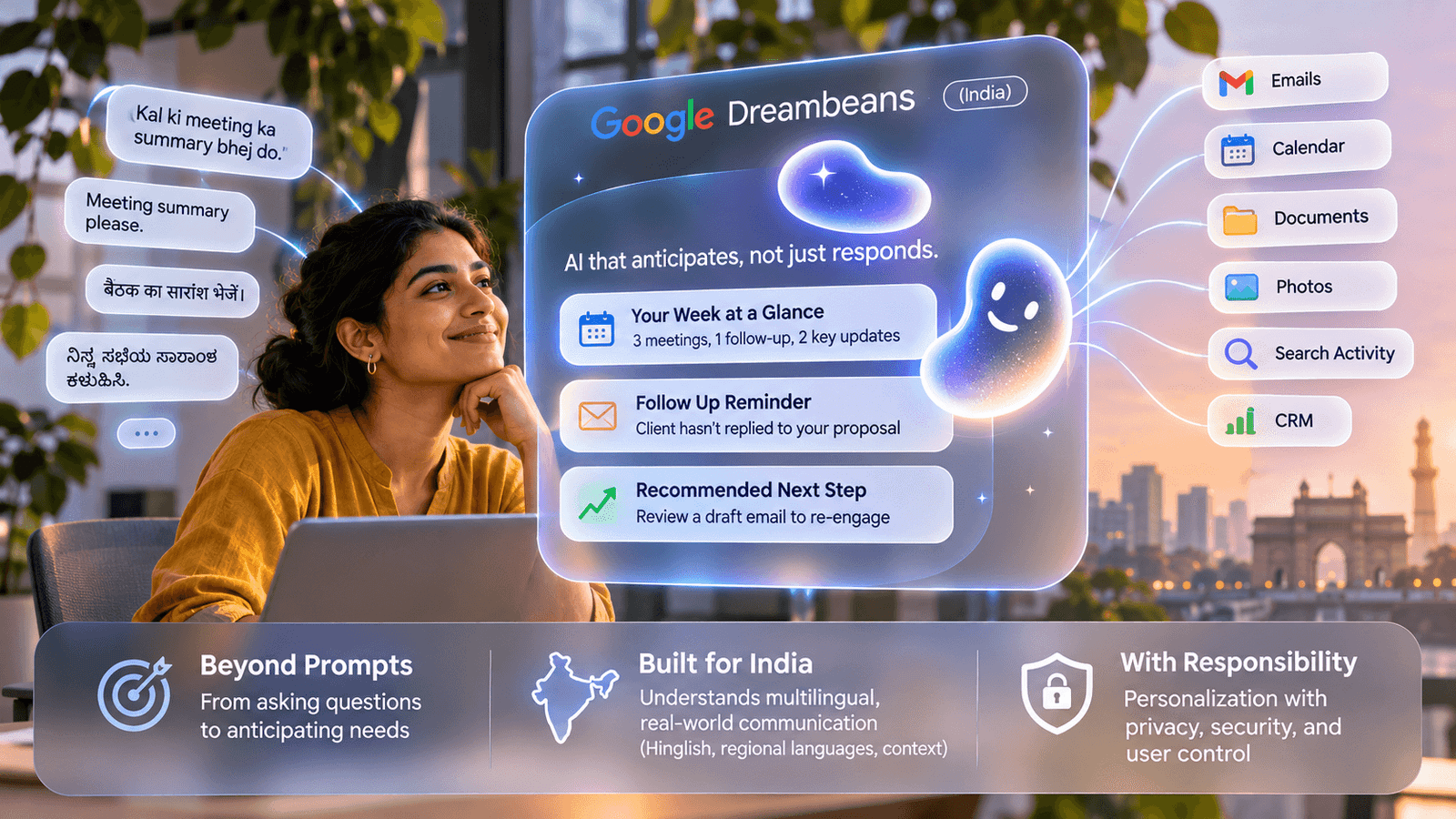
AI is moving beyond chatbots and prompts. Google's reported Dreambeans expansion offers a glimpse into a future where technology understands context, anticipates needs, and delivers personalized experiences without waiting for instructions. For most of us, using AI has become a familiar routine. Open an application, type a question, wait for a response, and refine the prompt until the result is useful. That approach has shaped how we interact with tools like ChatGPT, Gemini, and other AI-powered applications. But what happens when we no longer need to tell AI what to do? Imagine opening an application and finding a personalized summary of your week, a reminder about something important you had forgotten, or a recommendation based on your recent activities. You haven't typed anything. The application has simply connected the information already available to it. This is the idea behind zero-prompt AI, an emerging approach to building software that responds to context rather than relying entirely on direct instructions. Google's reported Dreambeans launch in India brings this concept into focus and raises some important questions about where AI-powered products are heading.
From Asking Questions to Anticipating Needs
Most AI applications today follow a straightforward process: the user asks, and the system responds. While this works well for many tasks, it also puts the responsibility on users to know what they need, explain it clearly, and provide enough context to get a useful answer. In practice, that isn't always convenient. Consider a sales manager who uses several applications throughout the day. Customer conversations happen over email, meetings are scheduled through a calendar, and sales opportunities are tracked in a CRM. The information needed to make a decision is already there, but it is scattered across different systems. A proactive AI application could connect those pieces of information and identify what needs attention. For example, it might notice that a potential customer hasn't responded to a proposal, recognize that a follow-up meeting is approaching, and prepare a suggested email for the sales manager to review. The manager doesn't need to search through multiple applications or ask an AI assistant to analyze the situation. The system has already done the groundwork. This is where proactive AI becomes particularly valuable for busy teams.
What Dreambeans Signifies for India
India is a major market for mobile technology and digital services. When global technology companies test new concepts there, it often signals a broader shift in how products will be built worldwide. Dreambeans represents a step toward ambient computing. This term describes technology that fades into the background and works quietly on behalf of the user. Instead of opening a dedicated chat interface, users interact with software that embeds intelligence directly into their daily workflows. At Dvilite, we watch these developments closely to understand how software design is changing. The focus is shifting from interface complexity to utility and timing. When an application can deliver the right insight at the exact moment it is needed, the interaction feels much more natural. This approach reduces friction and saves time for users who are already overwhelmed by notifications and open browser tabs. The launch in India suggests that users are ready for interfaces that require less manual effort and offer more relevant assistance.
The Practical Challenges Ahead
Moving to a zero-prompt model brings real challenges. The biggest hurdle is trust. If an application acts on your behalf without being asked, you need to trust that its assumptions are correct. False assumptions can lead to frustration or mistakes. Another challenge is privacy. To anticipate your needs, an application must process a significant amount of personal or work data across different tools. Users will rightly expect clear controls over what information is collected and how it is used. Companies must be transparent about data practices. Finally, there is the risk of over-automation. If software makes too many decisions in the background, users might lose track of important details or feel that they are losing control over their own schedules and tasks. Balance is essential. Software should assist rather than take over completely.
How Workplaces Will Adapt
As proactive tools become more common, workplace habits will evolve. Employees will spend less time searching for files, copying data between systems, and writing routine messages. Instead, their role will shift toward reviewing and approving suggestions generated by software. This change could improve productivity, but it also requires a different mindset. Workers will need to develop critical thinking skills to evaluate AI-generated recommendations effectively. They must learn to spot errors or missed context before a suggestion is acted upon. Organizations will need to provide guidance on how to use these ambient tools responsibly. Training will focus on data hygiene, ensuring that underlying systems contain accurate and up-to-date information so the AI can make reliable inferences. When the underlying data is messy, even the smartest zero-prompt application will struggle to deliver useful results.
Practical Takeaways for the Future
The zero-prompt era is still in its early stages, but the direction is clear. Software is evolving from a passive tool into an active partner. To prepare for this shift, keep a few practical points in mind. First, focus on organizing your digital workspace. Clean data leads to better automated insights. Second, remain critical of automated suggestions and always verify important details before taking action. Finally, stay informed as platforms like Google's Dreambeans introduce new ways of working. Technology should serve your goals without adding unnecessary complexity to your day.